

Work gives you income, structure and a sense of progress. Hobbies give you rest, creativity and a part of your identity that has nothing to do with your job title. Most people want both, and most people find that work quietly takes over unless they do something about it.
Balancing the two is not about finding extra hours in the day. It is about deciding in advance where your time goes, and then protecting that decision. This guide covers how to do that in a way that survives a busy week.
1. Understand Why Hobbies Matter for Your Career
It is easy to treat a hobby as a luxury you will get to later. In practice, people who keep an interest outside work tend to do better at work, not worse.
- Recovery. Your attention is a limited resource. Genuine rest is what refills it, and scrolling on your phone does not count.
- Transferable skills. Running a five-a-side team teaches coordination. Woodworking teaches patience and planning. These show up in your working life.
- Protection from burnout. If your job is the only thing that defines you, a bad quarter at work feels like a personal failure.
- A wider network. Hobby groups introduce you to people from completely different industries.
Treating your hobby as part of your career maintenance, rather than a reward for finishing your work, changes how easily you protect the time.
2. Find Out Where Your Time Actually Goes
Most people think they have no free time. When they measure it, they usually find several hours a week they did not know about, scattered in small pieces.
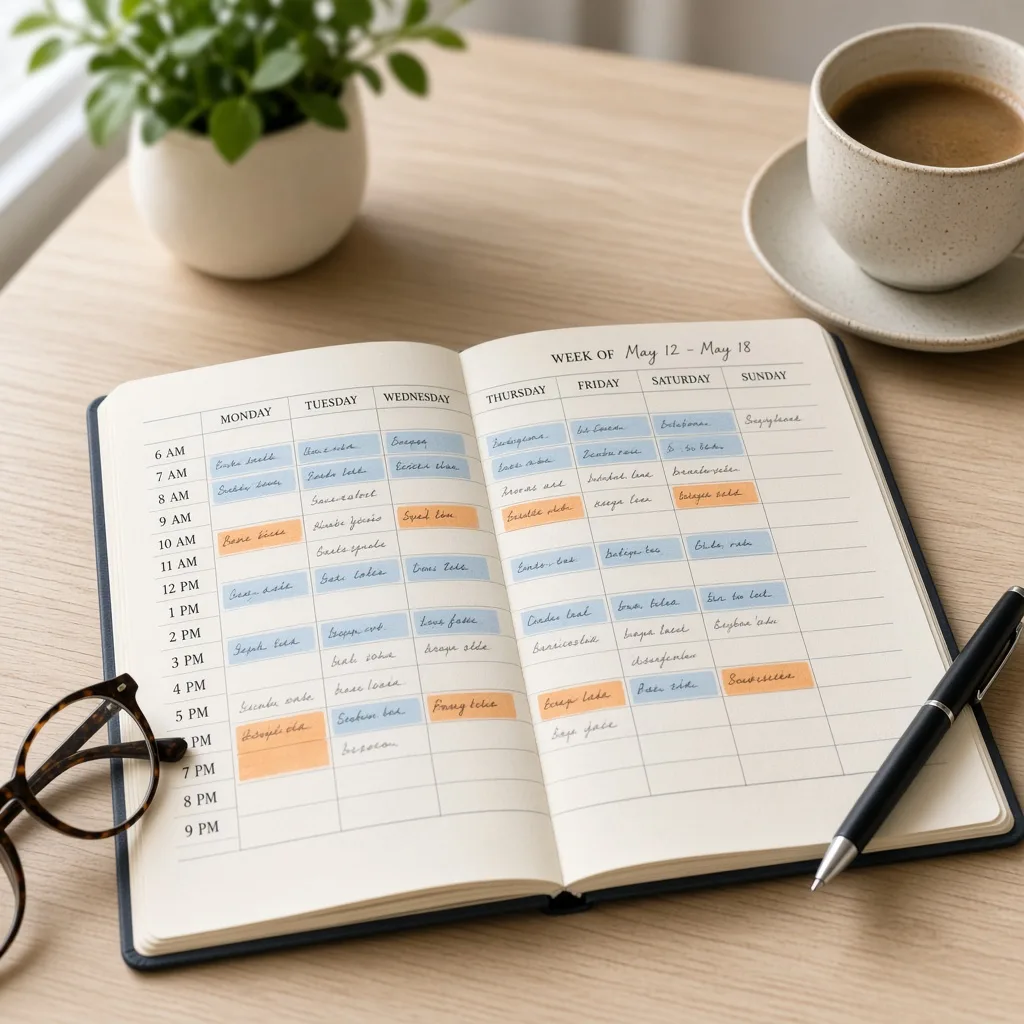
Spend one ordinary week doing this:
- Write down what you do in blocks of 30 minutes. A notes app is fine.
- At the end of the week, group the blocks into work, sleep, chores, family, and everything else.
- Look honestly at the "everything else" column, particularly time on your phone and in front of the television.
You are not trying to eliminate rest. You are looking for time that passes without giving you anything back, because that is the time you can move to something you actually enjoy.
3. Set a Clear End to the Working Day
Without a defined finish, work expands to fill whatever space is available. This is much harder when you work from home, because the office never physically closes.

A few practical boundaries that hold up in real life:
- Pick a finishing time and tell someone. A commitment you have said out loud is harder to break.
- Build a short shutdown routine. Write tomorrow's top three tasks, close your tabs, and physically shut the laptop.
- Move work notifications off your personal phone, or at least schedule them to go silent after hours.
- Create a fake commute. A ten-minute walk around the block tells your brain the working day is over.
- Agree what counts as a real emergency with your manager, so you are not treating every message as urgent.
If work regularly spills past your finishing time, the problem is usually workload rather than willpower. Our guide to practical work-life balance covers how to raise that conversation with a manager.
4. Book Hobby Time Like a Meeting
Anything that only happens "when there is time" will not happen. Put it in the calendar with a start and an end, and treat it like an appointment you would not cancel on someone else.
Two or three fixed slots a week work better than a vague plan to do more. Keep them small enough to be realistic. A guaranteed 40 minutes on Tuesday and Thursday beats an ambitious three-hour block on Sunday that keeps getting cancelled.
If you want the commitment to stick, write it as a specific goal rather than a general wish. Our SMART goal builder turns "practise guitar more" into something with a clear time, measure and deadline.
5. Match the Hobby to the Time You Actually Have
A common reason hobbies fail is a mismatch between the activity and the life around it. If your evenings are unpredictable, a hobby that needs a fixed three-hour block will not survive.
- Under 30 minutes: reading, sketching, an instrument, language practice, journalling, stretching.
- One to two hours: cooking properly, gym sessions, gardening, photography walks, board games.
- Half a day or more: hiking, woodworking, restoring things, long-distance cycling, pottery.
Many people do best with one small hobby they can do almost daily and one larger one for weekends. The small one keeps the habit alive during busy periods, so you never fully lose the thread.
6. Use the Small Pockets of Time
You do not need a clear evening to make progress. Twenty minutes, used regularly, adds up to more than an occasional long session.
Keep what you need ready and visible. A guitar on a stand gets played far more often than one in a case under the bed. A book on the kitchen table gets read; one on a shelf does not. Lowering the friction to start is the single most effective trick here, and it applies to almost any interest, including building a consistent reading habit.
7. Make It Social Where You Can
A hobby you do with other people is much harder to skip, because someone is expecting you.

Classes, clubs and regular meet-ups add accountability, and they turn your hobby time into social time as well, which matters if long working hours have made it hard to see people. A weekly class also gives your week a fixed shape that work has to plan around, rather than the other way round.
8. Protect Your Hobby From Work Creep
Even with good intentions, busy periods will try to take your personal time first. A few defences help:
- Do not label it as "free time" in your calendar. Give it a real name so it looks like a commitment.
- Decide in advance what you will drop when a genuinely heavy week arrives, so your hobby is not the automatic first casualty.
- Reduce rather than cancel. Fifteen minutes keeps the habit alive; skipping entirely for three weeks usually ends it.
- Watch for guilt. Feeling guilty about resting is a sign of overwork, not laziness.
If family commitments are competing for the same hours, our guide on balancing work and family life covers how to divide the time without one side quietly losing.
9. Notice When a Hobby Starts to Feel Like Work
Hobbies are supposed to restore you. Sometimes they stop doing that, usually when you start measuring them. Tracking every run, chasing follower counts, or setting targets for something you took up for fun can turn rest back into pressure.
If you notice that happening, drop the metrics for a while and go back to doing the thing badly and happily. A hobby does not need to produce anything to be worth your time.
10. Should You Turn Your Hobby Into a Side Hustle?
It is tempting, and sometimes it works well. But be clear about what you are trading. The moment your hobby has customers and deadlines, it stops being the thing you escape to.
A reasonable middle path is to keep the hobby itself protected and monetise only a small part of it, such as selling occasional pieces rather than taking commissions. If you are seriously considering it, the side-hustle starter check helps you work out whether the numbers and the time commitment stack up before you change anything.
Conclusion
Balancing work and hobbies comes down to a few simple habits: know where your time actually goes, set a real end to the working day, schedule your hobby instead of hoping for a gap, and choose activities that fit the life you have rather than the one you wish you had.
Start with one change this week. Pick a finishing time, book one 40-minute slot, and leave whatever you need for your hobby out where you can see it. Protecting a few hours will make both your work and your rest noticeably better.