

A phone interview is usually the first real conversation you have with an employer. It is short, it is often unplanned from your side, and it decides whether you move forward to a face-to-face or video interview. The good news is that a phone interview is one of the easiest stages to prepare for, because the employer cannot see you. Your notes, your research and your checklist can all sit in front of you.
This guide walks through what to do before the call, during the call and after it, so you can turn a quick screening chat into an invitation to the next round.
1. Understand Why Employers Use Phone Interviews
A phone interview is a filter. The recruiter usually has a long list of applicants and needs to cut it down to a handful — getting onto that list at all is the job of your CV, and writing a CV that gets interviews covers how. They are not trying to test your deep technical skill at this stage. They want to check a few simple things:
- Are you still interested in the job, and are you available?
- Do your real skills match what your CV claims?
- Can you explain your experience clearly?
- Do your salary hopes fit the budget for the role?
- Are you pleasant to talk to?
Once you know the purpose, your job becomes clear. Give short, confident answers, show real interest, and give the recruiter no reason to move you to the "no" pile.
2. Prepare Like It Is a Face-to-Face Interview
Many people treat a phone call as something casual. That is the most common mistake. Prepare exactly as you would for an in-person meeting.
Start with the company. Read the "About" page, the latest news on their site, and their recent posts on LinkedIn. Try to find one specific thing you can mention, such as a new product, a new office, or an award. A single specific comment proves you actually did the reading.
Then read the job advert line by line. For each requirement, think of one example from your own work that matches it. If the advert says "manages several projects at once", have a real story ready about a week when you juggled three deadlines and how you handled it.
If you want a ready-made set of questions to practise with, our interview question pack gives you role-specific questions you can rehearse out loud before the call.
3. Get Your Documents Ready
The biggest advantage of a phone interview is that you can use notes. Set everything out before the call so you are not shuffling paper while the recruiter is talking.
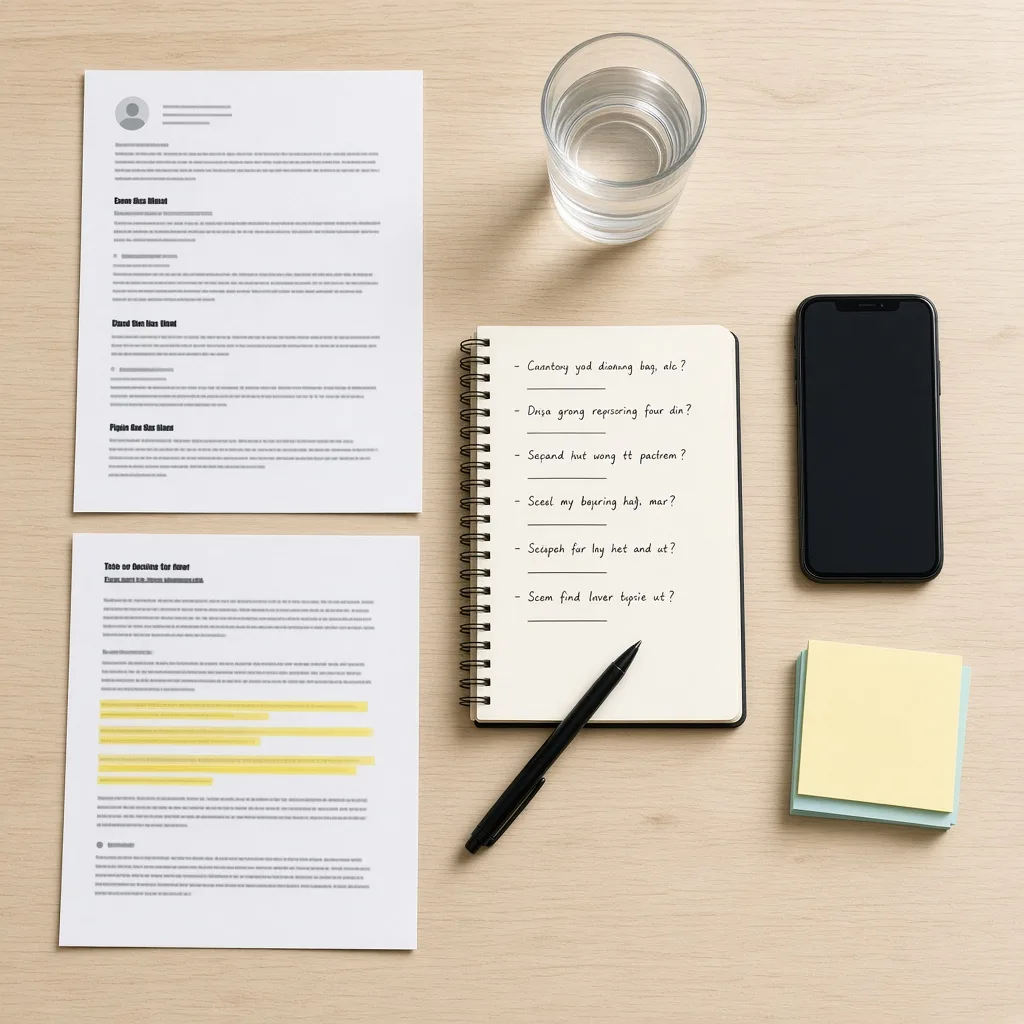
Keep these within easy reach:
- Your CV, in the exact version you sent to this employer.
- The job description, with the key requirements highlighted.
- A short list of achievements with numbers, such as "cut invoice errors by 30%".
- Your questions for the interviewer, written out in full.
- A pen and blank paper for names, dates and next steps.
- A glass of water, because a dry mouth is very common when you are nervous.
Keep your notes to single words and short phrases. If you write full sentences you will be tempted to read them, and reading always sounds flat on the phone.
4. Pick a Quiet Place With a Strong Signal
Background noise is the fastest way to lose a recruiter's attention. Choose your location well before the call.
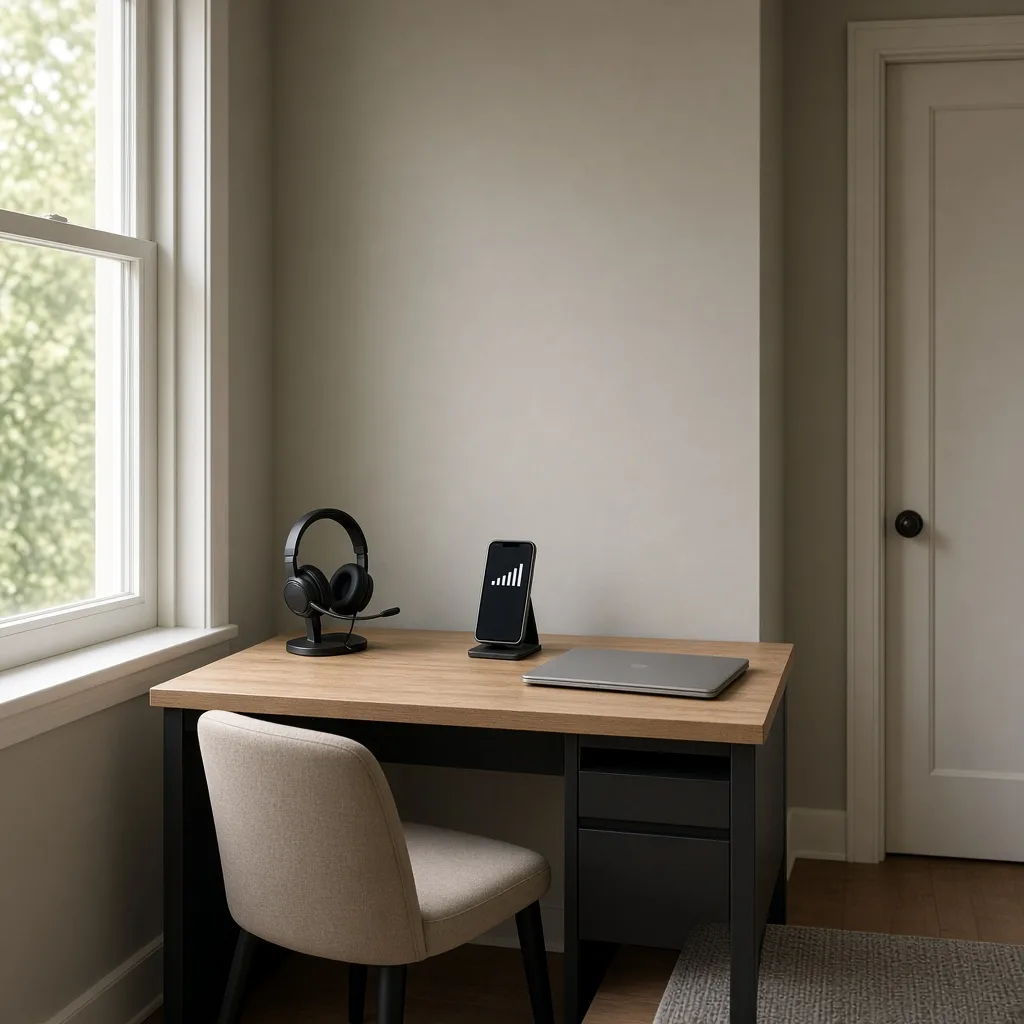
Work through this short checklist:
- Pick a room with a door you can close.
- Test your signal in that exact spot the day before. If it is weak, use a landline or a stable Wi-Fi call.
- Charge your phone fully, and keep the charger plugged in nearby.
- Turn off the television, notifications and anything that beeps.
- Tell the people you live with the exact time, and ask them not to knock.
- If you have pets, move them to another room first.
A wired headset with a microphone is usually clearer than a speakerphone, and it frees both hands for your notes. Avoid the speakerphone unless you have no other choice, because it picks up echo and room noise.
5. Remember That How You Sound Is All They Have
On a phone call the interviewer cannot see your face, your smile or your body language. Every impression they form comes from your voice alone. That means tone matters far more than it does in person.

A few simple habits make a big difference:
- Stand up or sit up straight. Standing opens your chest and makes your voice stronger and warmer.
- Smile while you speak. It sounds strange, but a smile genuinely changes the sound of your voice.
- Slow down. Nervous people speak quickly. Aim for a pace slightly slower than normal.
- Pause before answering. A one-second pause sounds thoughtful, not slow.
- Do not interrupt. Phone lines have a small delay, so wait until the other person has clearly finished.
- Use short verbal signals such as "yes" and "I see" so the interviewer knows you are still listening.
6. Prepare for the Questions That Almost Always Come Up
Screening calls follow a predictable pattern. Prepare a clear answer for each of these and you will handle most of the call comfortably.
- "Tell me about yourself." Give a 60 to 90 second summary: what you do now, one or two relevant achievements, and why this role interests you. Do not tell your life story.
- "Why are you looking to leave your current job?" Stay positive. Talk about what you want to move towards, not what you dislike.
- "Why this company?" This is where your research pays off. Mention the specific detail you found.
- "Walk me through your CV." Keep it chronological and brief, and explain any gaps calmly and honestly.
- "What is your notice period and availability?" Know your exact dates before the call.
For behavioural questions, use a simple structure: describe the situation, what you did, and what the result was. Keeping the result at the end makes your answer land well.
7. Handle the Salary Question Carefully
Recruiters often raise pay on the first call, because it saves everyone time if the budget does not match. Do not be caught off guard.
Before the call, research the normal range for the role in your city and decide on your own minimum. If you are asked early, it is perfectly professional to say that you would like to understand the responsibilities first, and then give a range rather than a single figure.
If you want help building a number you can defend, our salary negotiation script builder turns your experience and results into wording you can use on the call.
8. Ask Your Own Questions
Near the end, the interviewer will ask whether you have questions. Always say yes. Having none suggests you are not very interested.
Good questions to keep on your list include:
- What does a normal week look like for someone in this role?
- What would success look like in the first three months?
- Who would I work with most closely?
- What are the next steps in the hiring process, and when should I expect to hear back?
Culture and flexibility are fair topics too, but the wording matters. Our guide on how to ask about work-life balance in an interview shows how to raise it without sounding uncommitted.
9. Close the Call Properly
The last thirty seconds are worth planning. Thank the interviewer by name, say clearly that you are interested in the role, and confirm what happens next. Something as simple as this works well: "Thank you for your time, Sarah. This sounds like a great fit and I would be very glad to move forward. When should I expect to hear from you?"
Write down the interviewer's name and email while it is fresh. Then send a short thank-you email within 24 hours. Keep it to three or four sentences: thank them, mention one specific thing from the conversation, and restate your interest.
10. Avoid These Common Mistakes
- Taking the call in a car or a public place. Ask to reschedule instead; recruiters respect that.
- Reading answers word for word. It is obvious, and it sounds robotic.
- Talking too long. Aim for around two minutes per answer, then stop and let them lead.
- Eating, chewing gum or typing loudly. The microphone picks all of it up.
- Speaking badly about a previous employer. It always reflects on you, not them.
- Forgetting what job you applied for. If you have applied to many, keep a simple tracking sheet.
Conclusion
A phone interview rewards preparation more than any other stage of hiring, because you are allowed to keep every note and prompt in front of you. Research the company, lay out your documents, find a quiet room with a good signal, and pay attention to how your voice sounds. Answer clearly, ask thoughtful questions, and follow up the same day.
Do that consistently and the phone screen stops being a hurdle and becomes the easiest part of the process. If you are preparing for a specific front-of-house role, our interview tips for a receptionist role cover the questions that come up most often in that field.