

Most products fail for the same reason: nobody checked whether people actually wanted them. Exploratory research is the work you do before you build anything, to find out what your potential customers struggle with, how they solve that problem today, and whether they would pay for something better.
It is called exploratory because you start without a fixed answer. You are not trying to prove your idea is good. You are trying to find out what is true. This guide walks through the whole process, from setting a clear question to turning what you learn into a decision.
1. Start With a Question, Not an Idea
The most common mistake is beginning with "how do I sell my product?" That question already assumes the product should exist. Instead, write down what you genuinely do not know yet.
Good starting questions look like this:
- What is the most frustrating part of this task for the people who do it?
- How are they solving it right now, and what does that cost them?
- How often does the problem actually come up?
- Who decides whether to spend money on a solution?
Write down three or four questions and keep them visible. Everything you do next should answer one of them. If an activity does not answer any of them, it is a distraction.
2. Describe Who You Are Researching
"Everyone" is not an audience. You need a group specific enough that you could actually go and find ten of them this week.
Define your group across three dimensions:
- Who they are: their role, rough age, location, and income level.
- What they care about: their goals, frustrations, and what they value.
- What they do: how they currently shop, what tools they use, and who else is involved when they buy.
"Freelance designers who bill clients monthly and manage their own invoicing" is a group you can research. "Small business owners" is not.
3. Do the Desk Research First
Before you speak to a single person, spend a few hours finding out what is already known. This is free, it is fast, and it stops you wasting interviews on questions that public data already answers.
Useful sources include:
- Google Trends, to see whether interest in the topic is rising, flat or falling over several years.
- Competitor websites, for how they describe the problem, what they charge and who they target.
- Customer reviews of competitors, which are the single richest free source of complaints and unmet needs.
- Industry reports and trade publications, for market size and direction.
- Government and census data, for demographics and spending patterns.
Pay particular attention to the two and three star reviews of competing products. Five star reviews tell you what works and one star reviews are often about shipping. The middle ratings are where people explain in detail what almost worked.
4. Talk to Real People
Desk research tells you what already happened. Conversations tell you why. This is the part most people skip, and it is the part that matters most.

You do not need a large sample. Five to ten good conversations will surface most of the major themes. What matters is how you ask.
Ask about the past, not the future. "Would you buy this?" produces polite lies. "Tell me about the last time you had this problem" produces facts. People are unreliable predictors of their own behaviour but reasonably good reporters of what they actually did.
Questions that work well:
- Walk me through the last time you had to do this.
- What was the most annoying part of it?
- What did you try before that? Why did you stop?
- How much time or money does this cost you in a typical month?
- If this problem disappeared tomorrow, what would change for you?
Do not describe your idea until the end, if at all. The moment you pitch, the person switches from telling you about their life to reacting to your proposal, and the useful information stops.
5. Listen to Online Communities
If you cannot yet reach people directly, they are already talking in public. Reddit threads, Facebook groups, Quora answers and niche forums are full of people describing problems in their own words, unprompted and honestly.
Search for phrases people actually type, such as "how do I stop" or "is there anything better than" plus your topic. Note the exact wording they use. That language belongs in your product descriptions later, because it will match how future customers search.
6. Use Surveys to Measure, Not to Discover
Surveys are poor at discovering new problems, because you can only ask about things you already thought of. They are very good at measuring how common something is once you know what to look for.
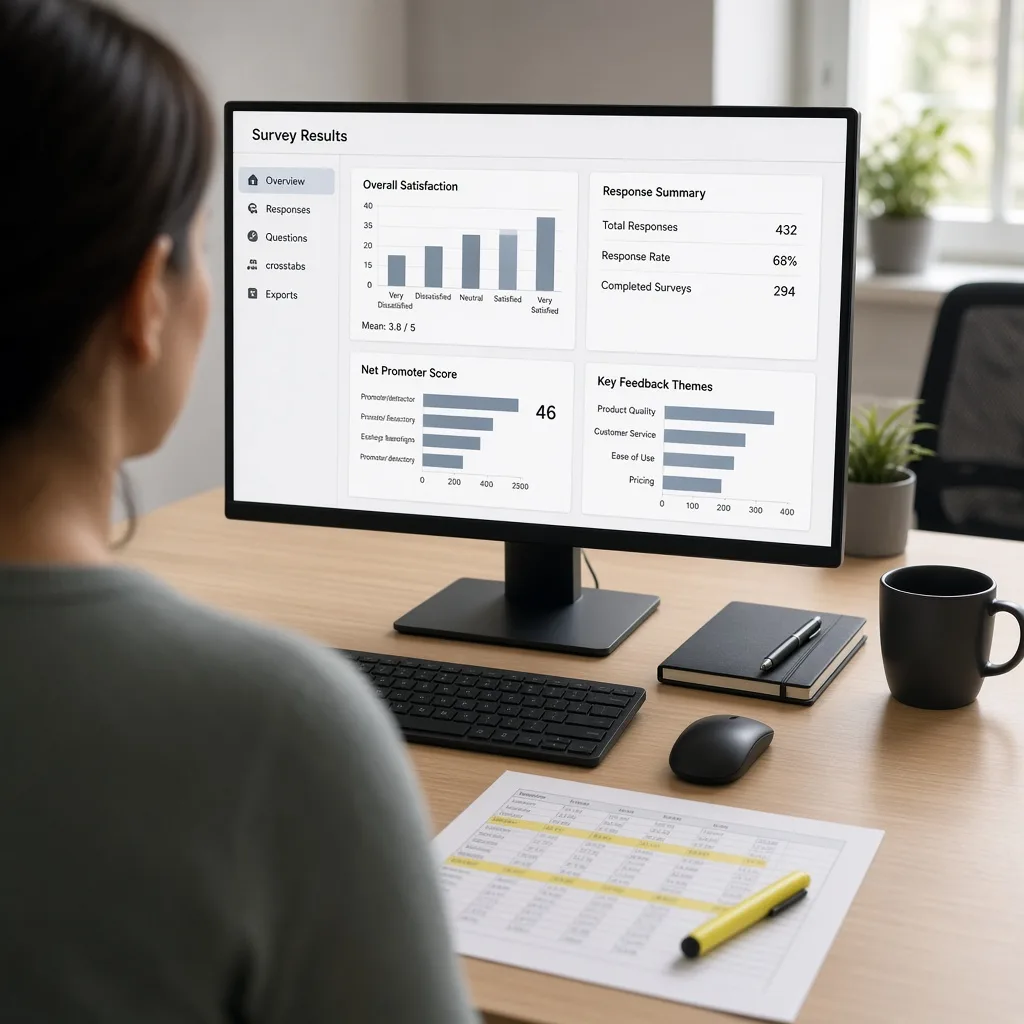
Run your conversations first, identify the three or four themes that keep coming up, then build a short survey to find out how widespread those themes are. Keep it under ten questions, ask one thing per question, and avoid leading wording. Free tools such as Google Forms are perfectly adequate.
A practical warning on numbers: 30 responses from your actual target group is worth far more than 300 responses from a general audience. Where you recruit matters more than how many you reach.
7. Put a Rough Prototype in Front of People
You can test a concept long before you build it. A sketch, a single web page, or a simple mock-up is enough to see whether people understand what you are offering.

Useful low-cost tests include:
- A one-page description. Show it and ask the person to explain back what it does. If they cannot, your positioning is unclear.
- A paper or clickable mock-up. Watch where they hesitate rather than asking whether they like it.
- A small advert test. Spend a modest amount driving traffic to a simple landing page and measure how many people click and sign up.
Signing up with an email address is a far stronger signal than saying "that sounds great". Look for small commitments, not compliments.
8. Turn Your Notes Into Findings
Raw notes are not research. The value comes from grouping them.
Work through this simple process:
- Write every distinct observation on its own line or sticky note.
- Group the ones that say the same thing, even when the wording differs.
- Name each group in plain language, such as "people forget to invoice on time".
- Count how many separate people mentioned each group.
- Mark anything that contradicts what you originally believed.
That last step is the most valuable. If nothing you found surprised you, it usually means you were asking leading questions rather than genuinely exploring.
9. Decide Something
Research that does not change a decision was a waste of time. Close the process by writing a short summary: the three clearest findings, what surprised you, what you still do not know, and what you are going to do next. If the decision is to go ahead, writing a business plan is the natural next step, since it turns those findings into costs and a forecast.
There are only three honest outcomes. Continue, because the problem is real and people already pay to solve it badly. Adjust, because the problem is real but different from what you assumed. Or stop, because the problem is not painful enough. Stopping after two weeks of research is a good outcome, not a failure.
If your idea is an online store, the guide to choosing a dropshipping niche covers how to apply this to a product category, and the side-hustle starter check helps you judge whether the time and budget are realistic for you.
10. Keep Researching After Launch
Exploratory research is not a stage you finish. The market moves, competitors change and your customers change. Build in small ongoing habits: read your own reviews properly, ask one open question in your order confirmation emails, and talk to a handful of customers every quarter.
The businesses that stay relevant are the ones that never stop listening, long after the first version has shipped.
Conclusion
Good exploratory research is not complicated, but it does require discipline. Start with questions you genuinely cannot answer, define a group narrow enough to actually find, read what is already public, then talk to real people about what they did rather than what they might do. Measure the themes with a short survey, test a rough version, and group your notes into findings that change a decision.
Do that and you will spend your money building something people already want, instead of finding out afterwards that they did not. If you are planning a lean launch, our guide on starting an ecommerce business without money is a sensible next read.