
Freelance true hourly rate
Calculate what you actually need to charge per hour to hit your monthly income goals.
Your True Hourly Rate
This rate accounts for 30% estimated taxes and covers your non-billable hours.
The fastest way to burn out as a freelancer is to charge an hourly rate based on what a salaried employee makes. Salaried employees don't pay for their own laptops, internet, sick days, or self-employment tax. When a company pays an employee $30 an hour, that employee actually costs the company closer to $40-$45 an hour when benefits, taxes, and overhead are factored in.
This calculator works backwards. You enter what you actually want to take home each month and what your business costs are. It tells you exactly what you need to charge per hour to make that happen without working 80-hour weeks. It forces you to confront the reality of non-billable time and the hidden costs of running a business.
Many beginners are terrified of charging $75 or $100 an hour because it sounds exorbitant compared to a traditional salary. But once you account for the fact that you only bill 25 hours a week, pay double payroll taxes, and cover your own health insurance, $100 an hour is often the bare minimum required for a middle-class lifestyle.
The hidden costs of freelancing
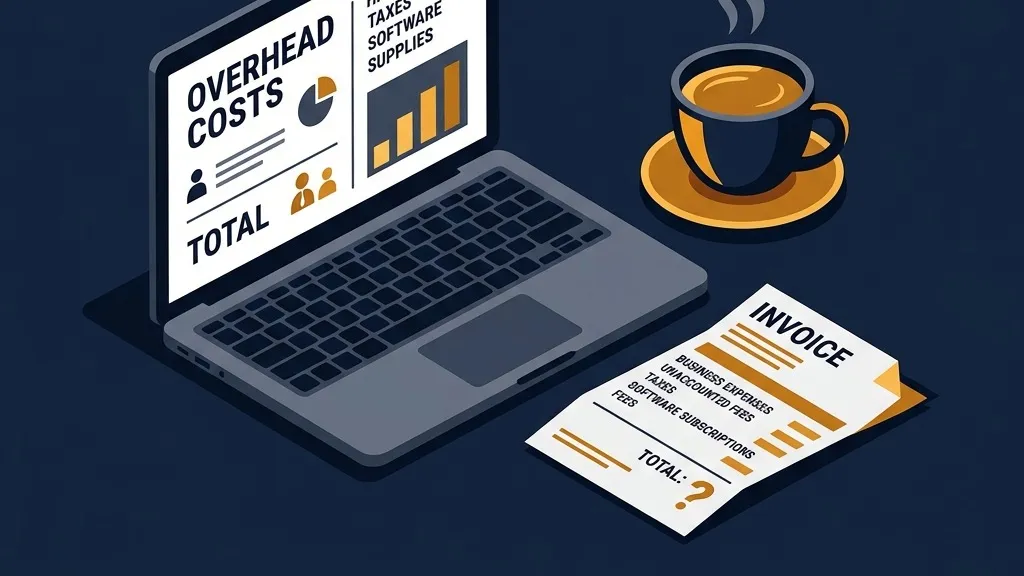
Most freelancers only count billable hours. But you also spend time pitching, invoicing, accounting, and answering emails. If you want to work 40 hours a week, you might only be billing for 20 to 25 of those hours.
Your hourly rate needs to subsidize those 15 unpaid admin hours. If it doesn't, you're effectively paying yourself below minimum wage for half of your workweek. Furthermore, you must account for software subscriptions, web hosting, legal fees, and hardware depreciation.
When you are a freelancer, you are not just the worker; you are the CEO, the marketing department, and the janitor. Your rate must cover the salaries of all those roles.
Taxes and accounting for the self-employed
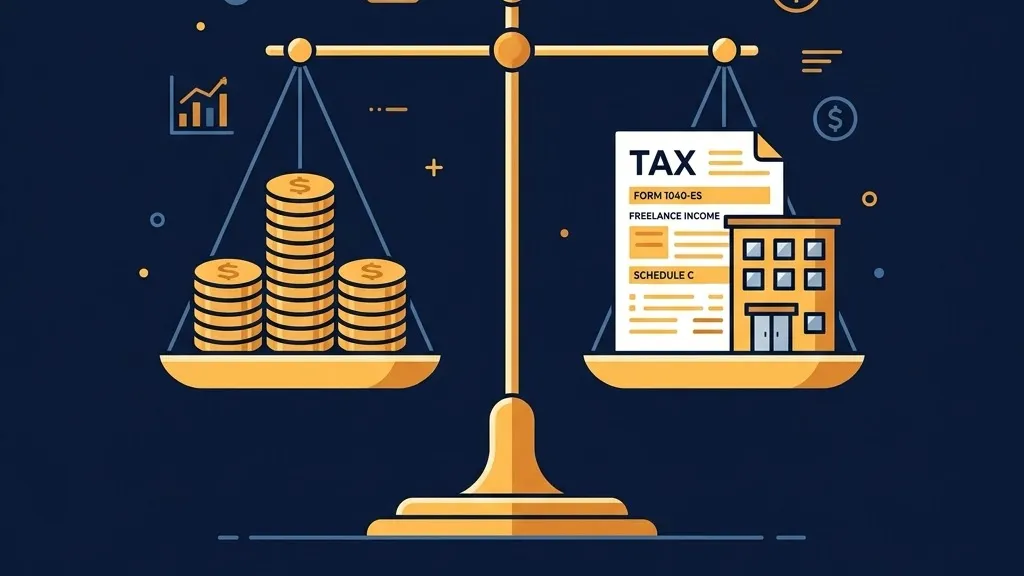
In a traditional job, your employer pays half of your payroll taxes and automatically withholds your income tax. As a freelancer, you are responsible for the entire tax burden, including self-employment tax, which can be devastating if you aren't prepared.
As a general rule, you should be setting aside 25% to 30% of every single payment you receive into a separate, untouched savings account specifically for quarterly estimated taxes.
A good freelance rate accounts for this massive tax burden upfront. If you want to take home $5,000 a month, your gross revenue needs to be closer to $7,500 a month just to cover taxes and overhead. Do not let April 15th bankrupt your business.
Setting strict boundaries on your time
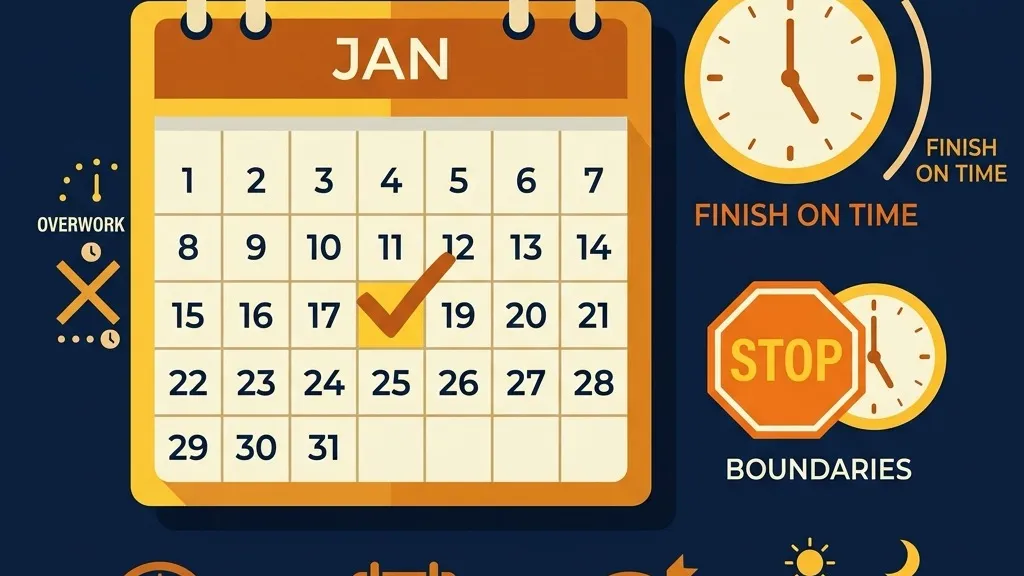
A great hourly rate means nothing if clients text you at 9 PM on a Sunday. You must set strict communication and revision boundaries from day one. Freelancing offers freedom, but without boundaries, it simply becomes a 24/7 job with terrible a boss (your clients).
Put your working hours in your email signature. State clearly in your contracts how many rounds of revisions are included, and explicitly state your hourly rate for any work that falls outside the initial scope of the project.
When a client asks for a 'quick favor' that will take an hour, you must bill for it. Those quick favors add up to thousands of dollars in lost revenue over a year. Protect your time relentlessly.
Transitioning to value-based pricing
Hourly pricing punishes efficiency. If you become an expert and can build a website in 5 hours instead of 20, you shouldn't get paid 75% less for delivering the same result faster.
Once you know your baseline hourly rate, you should transition to project-based or value-based pricing. Instead of quoting 10 hours at $100/hr, quote a flat $1,500 for the project. If you finish it in 5 hours, your effective hourly rate just jumped to $300/hr.
Value-based pricing aligns your incentives with the client's incentives. They care about the final deliverable, not how many hours you sat in a chair. Price the value of the solution, not the time it takes to implement.

When and how to raise your rates
The easiest rule of thumb: if you are fully booked for the next 3 to 4 weeks and are actively turning away new clients, your rates are too low. High demand means you have pricing power.
Raise your rates by 15-20% for the very next new lead that comes into your inbox. If they say yes without blinking, that is your new baseline rate. Continue doing this until you get pushback.
For existing legacy clients, you can transition them slower. Send a polite email 30 days before the new year explaining that your rates will be increasing to keep up with demand and inflation, but offer them a slightly discounted legacy rate as a thank you for their loyalty.
Frequently asked questions
How many billable hours can a freelancer actually work?
Most full-time freelancers cap out at 20-30 billable hours per week. The rest of the time is spent on administrative tasks, marketing, pitching new clients, invoicing, and business development. Never calculate your rate assuming 40 billable hours.
Should I charge hourly or per project?
Start hourly so you learn exactly how long tasks actually take. Once you are fast, efficient, and know your metrics, switch to project-based (value-based) pricing so you aren't financially punished for working quickly.
How much should I save for freelance taxes?
A safe rule of thumb in the US/UK is to set aside 25% to 30% of every single payment you receive into a separate tax savings account immediately upon receipt. Pay your quarterly estimated taxes on time to avoid penalties.
What if a client says my rate is too high?
Not every client is your client. If someone says your rate is too high, simply state that you understand their budget constraints and politely walk away. Dropping your rate to win a bad client will only lead to resentment and prevent you from taking on high-paying work.
Do I charge for meetings and phone calls?
Yes. If a client wants to spend an hour on the phone discussing strategy or giving feedback, that is billable time. Make this clear in your onboarding document so there are no surprises when you send the invoice.